 Day Trips from Kyoto
Free Day Trips from Kyoto: Easy Days Out by Train and Bus
Free day trips from Kyoto mean days out on your own, with no tour fee, riding ordinary trains and buses. This page covers the closest and easiest of them: Uji, Osaka, Nara, Kurama and Kibune, and Ohara. You get the stations, the fares, the walking distances, what is genuinely free at the far end, opening hours, and a workable order for the day. Where a small guided option makes sense, it is flagged honestly with its exact price and what it does not include. The bookable tours are compared on day trips from Kyoto.
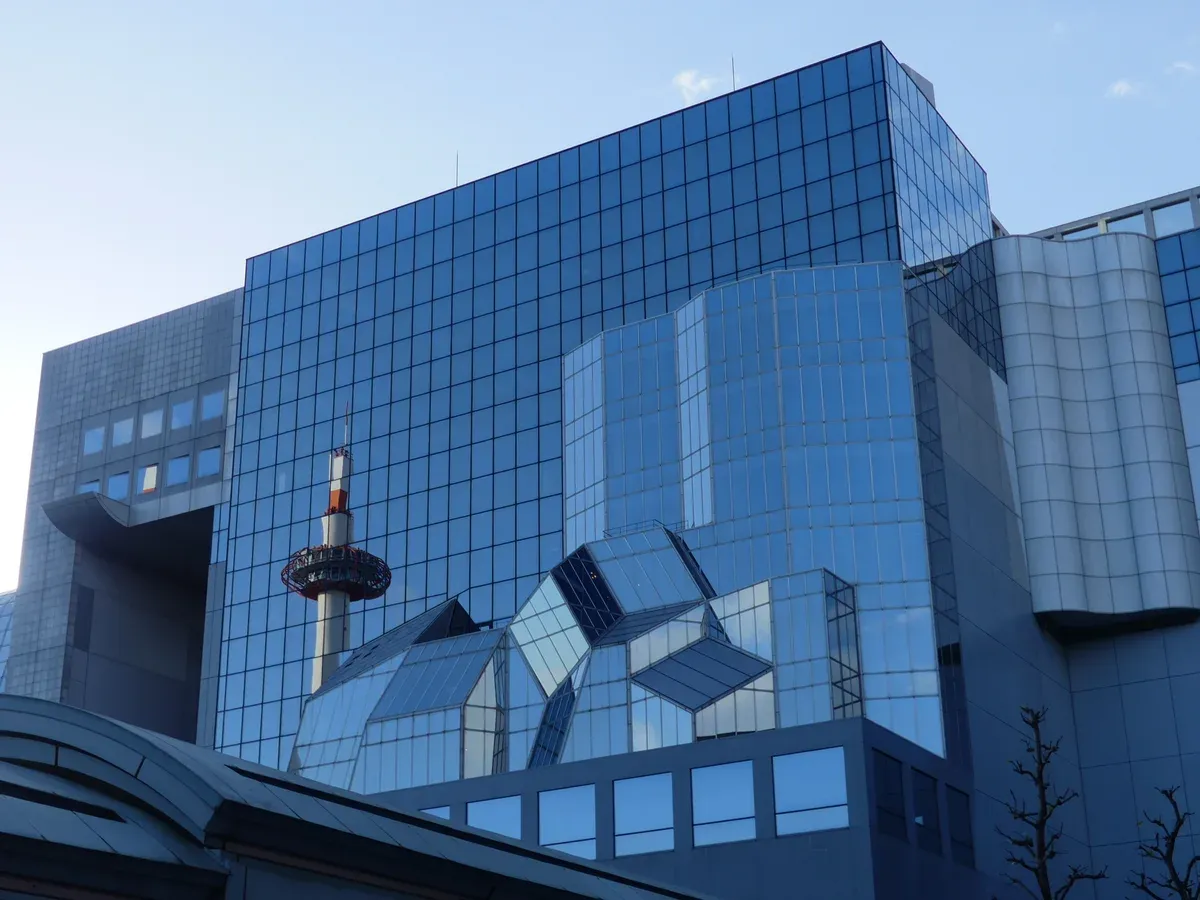
The glass facade of Kyoto Station with Kyoto Tower reflected in it. Photo: Hubert Fourny, CC BY-SA 4.0, via Wikimedia Commons
Quick answer The short answer
Uji is about 20 minutes on the JR Nara Line from Kyoto Station for 240 yen, Osaka about 29 minutes by JR Special Rapid for 580 yen, and Nara 45 minutes by JR rapid for 720 yen. On all three the train is the only cost you cannot avoid, and at the far end there is plenty that costs nothing. This page shows how to build each day yourself, station by station.
Key takeaways
- Nara, Uji, Osaka, Kurama and Kibune, and Ohara all work as do-it-yourself days, with the basics in How a Free Day Trip Works.
- Several trips within about an hour, compared in Under an Hour.
- The full Nara day, step by step, is in Nara Without a Tour, with the train detail in Kyoto to Nara by train.
- Deeper guides for each place sit on the day trips from Kyoto pages, including Uji and Osaka.
How a Free Day Trip from Kyoto Works
Free in this context means no tour fee and, where the official sites say so, free entry at the destination. The trains and buses still cost money, and the fares are small.
The Ticket Rule
An IC card such as ICOCA taps through the gates without paper tickets. A new ICOCA needs a 500 yen refundable deposit with a typical 1,500 yen initial charge, and the card stays valid for 10 years. A limited express seat is always a separate supplement on top of the base fare, so an ordinary rapid or local train is the cheapest way out of town. Day passes can undercut tapping when you ride a lot in one region. The WEST QR Kansai Area Pass costs 2,700 yen for 1 day and covers non-reserved seats on ordinary JR trains and HARUKA across Kyoto, Nara, Kobe and Himeji, but not the shinkansen, and it needs a smartphone to show a QR code at the gates. The Kintetsu Rail Pass costs 1,900 yen for 1 day, and the 1-day and 2-day versions cover Osaka, Nara and Kyoto, though limited express supplements are paid separately. The Eizan Railway has its own one-day Ee Kippu at 1,200 yen for adults. The JR Kansai WIDE Area Pass costs 12,000 yen for 5 days and only pays off on longer runs such as Amanohashidate.
For the trips on this page, single fares are so low that a pass rarely wins. Round-trip Nara by JR is two 720 yen taps. Uji is two 240 yen taps. Only when you chain several rides in a day, or plan a second day trip inside the pass window, does a day pass beat the IC card.
- ICOCA or any IC card: taps through the gates without paper tickets
- WEST QR Kansai Area Pass: 2,700 yen for 1 day of JR ordinary trains, no shinkansen
- Kintetsu Rail Pass: 1,900 yen for 1 day on Kintetsu, limited express extra
- Limited express supplements: always separate from the base fare
Where Each Line Leaves
Every trip on this page starts from a fixed station, and picking the wrong one wastes the first hour. Kyoto Station handles JR and Kintetsu. Demachiyanagi, in north Kyoto, is the Eizan Railway terminus for Kurama and Kibune and the start of the Eizan Cablecar route toward Mt Hiei.
Kyoto-kawaramachi in central Kyoto is the Hankyu terminus for Osaka-umeda. Keihan trains to Osaka and Uji leave from Sanjo or Gion-Shijo on the east bank of the river. Ohara has no train.
The direct Kyoto Bus 17 to Ohara leaves from the Kyoto Station bus terminal. The table below lists each departure point and where it takes you.
What Free Means, and What Still Costs
On these trips the journey is paid and the destination is largely free. Fushimi Inari Taisha in south Kyoto is free and always open. Nara Park and its deer cost nothing, deer crackers sold along the paths are around 200 yen, and the Kofuku-ji grounds are free and open around the clock.
Kurama and Kibune give you a free shrine in Kifune Shrine. At Ise Jingu the Naiku is free and open daily from 5:00. The Amanohashidate sandbar walk takes about 45 minutes.
What is not free are the big indoor sights: the Todai-ji Great Buddha Hall is 800 yen, Byodo-in in Uji is 700 yen for adults, the Osaka Castle main tower is 1,200 yen and Himeji Castle is 2,500 yen for adults from the 2026 fee change. A day can be built entirely from free places, or you can budget one paid entry and keep the rest free. Multi-day routes out of these places belong on the 2 day trip from Kyoto and 3 day trip from Kyoto pages, and the general station and luggage logistics live in how to plan a day trip from Kyoto.
Sources: JR West, japan-guide: Kyoto day trips
Under an Hour: Uji, Osaka, Nara, Kurama and Kibune, Ohara
These five destinations all sit within about an hour of central Kyoto, and the fare for each is under 1,000 yen one way.
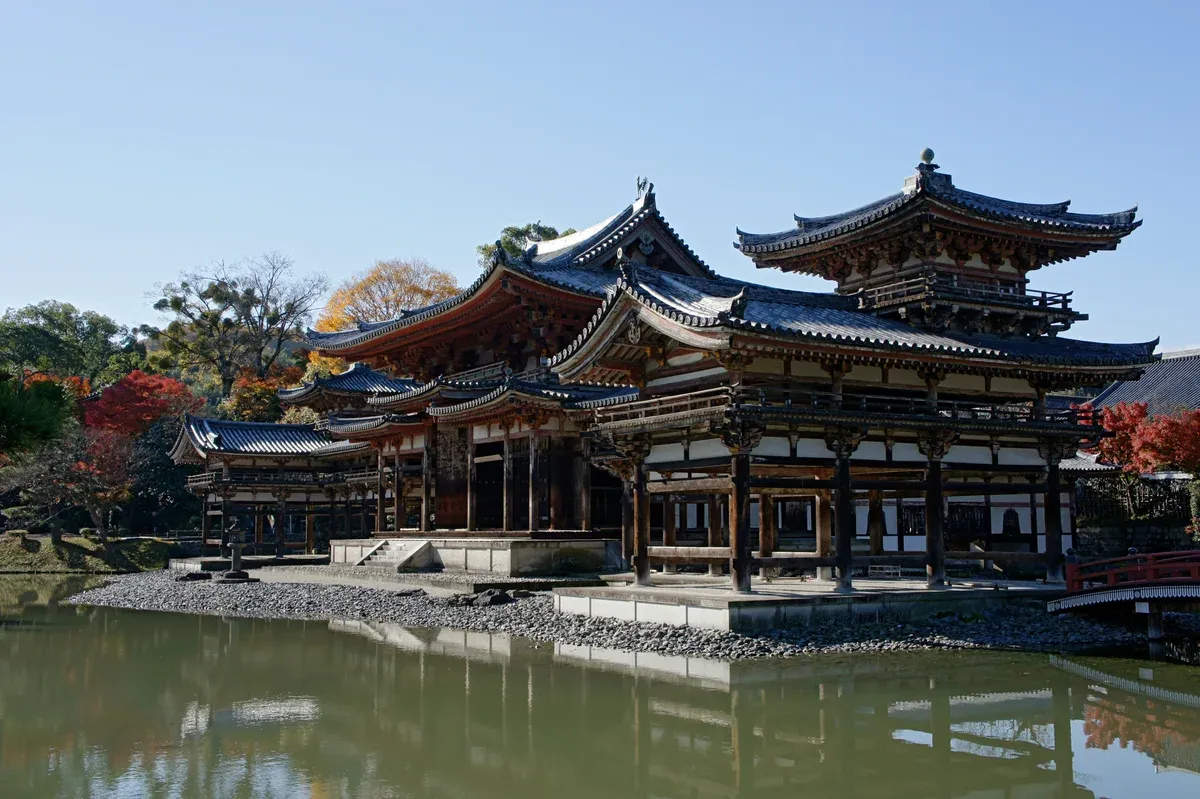
The Phoenix Hall of Byodo-in stands over its pond, a 10-15 minute walk from the stations. Photo: 663highland, CC BY 2.5, via Wikimedia Commons
Uji
The JR Nara Line from Kyoto Station reaches Uji in about 20 minutes by rapid or 30 minutes by local, for 240 yen either way, and the Japan Rail Pass covers it. If you are starting near the Kamogawa River in Gion rather than at Kyoto Station, the Keihan Main Line to Chushojima with a change to the Keihan Uji Line takes about 30 minutes for 400 yen. The table below compares the under-one-hour trips in this section, with fares for a one-way ride.
From JR Uji Station or Keihan Uji Station, Byodo-in is a 10-15 minute walk. The garden is open 8:45-17:30 with last entry 17:15, adult admission is 700 yen, and entering the Phoenix Hall interior costs an extra 300 yen for a 20-minute slot capped at 50 people, run in Japanese and closed without notice for ceremonies. Uji Bridge dates to around 646 and Ujigami Shrine is described as the oldest extant shrine in Japan, and walking the riverbank, the bridge and the Omotesando shopping street of matcha shops is free. A practical tip: matcha has been the town's trade since the 12th century, so skip paid tea houses with queues and buy a cup along Omotesando, then keep 700 yen for Byodo-in as the one paid entry of the day. The full route detail is on the Uji day trip page.
| Place | From | Time | Fare | What is free |
|---|---|---|---|---|
| Uji | Kyoto Station, JR Nara Line | about 20 min rapid | 240 yen | Uji Bridge, riverbank, Omotesando street |
| Osaka | Kyoto Station, JR Special Rapid | about 29 min | 580 yen | Osaka Castle park and grounds |
| Nara | Kyoto Station, JR Miyakoji rapid | 45 min | 720 yen | Nara Park, the deer, Kofuku-ji grounds |
| Kurama | Demachiyanagi, Eizan Railway | about 30 min | 470 yen | Kifune Shrine |
| Ohara | Kyoto Station bus terminal, Bus 17 | 60 min | 630 yen | village lanes outside the temples |
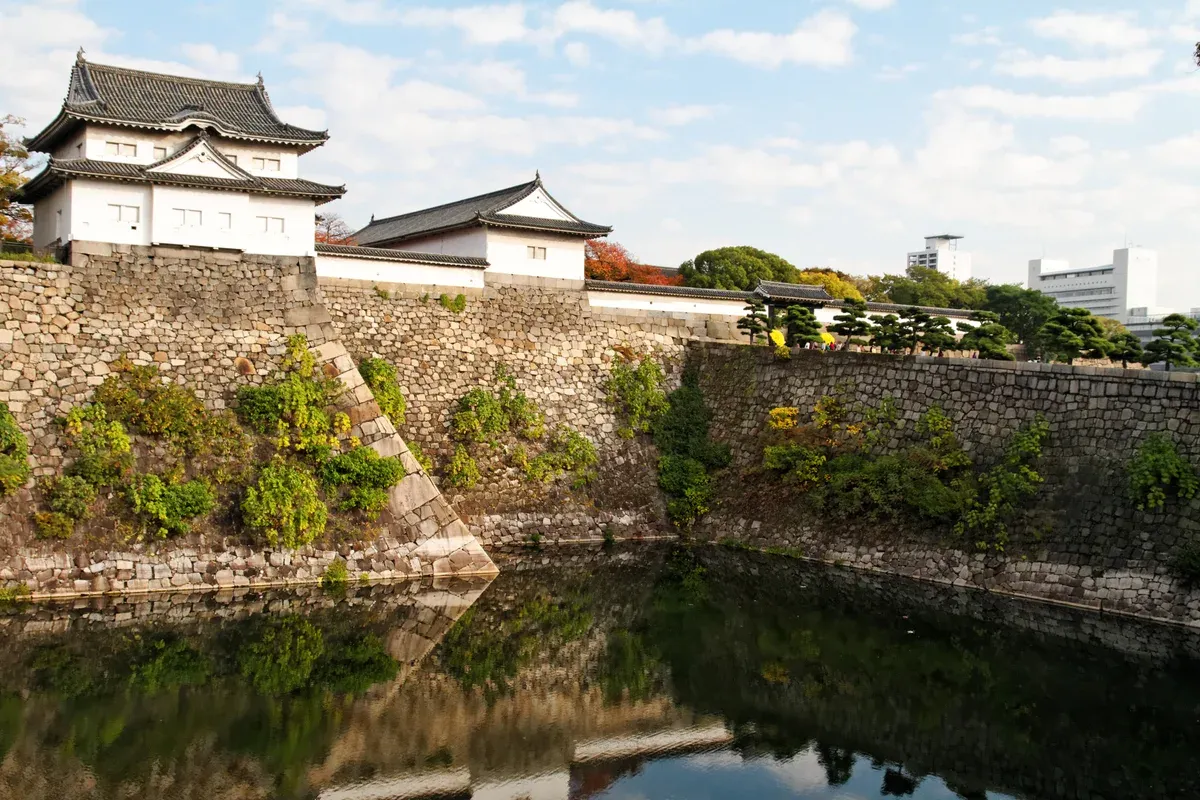
The Sengan turret and the Otemon gate guard the moat of Osaka Castle. Photo: KimonBerlin, CC BY-SA 2.0, via Wikimedia Commons
Osaka
The JR Special Rapid between Kyoto Station and Osaka Station takes about 29 minutes and costs 580 yen, with no limited express fee because this is an ordinary rapid train. Hankyu is the alternative from central Kyoto: Osaka-umeda to Kyoto-kawaramachi takes 43-48 minutes for 410 yen, and it is not covered by the JR Pass. Keihan runs from Sanjo toward Yodoyabashi, about 50 minutes for 490 yen from Sanjo, and its limited express does the run with no transfer. In practice the JR Special Rapid is the simplest choice from Kyoto Station.
The free core of the day is Osaka Castle. The park and the stone walls cost nothing to walk, and the main tower is the paid extra at 1,200 yen for adults, open 9:00-18:00 with entry until 17:30 and closed 28 December to 1 January. Expect lines of more than 30 minutes on busy days. Nishinomaru Garden costs 300 yen, or 350 yen in cherry blossom season, and closes Mondays. From Osaka Station the JR Loop Line reaches Osakajokoen in 10 minutes for 180 yen. Build the day as castle park in the morning, the paid tower if the queue is short, then the free streets around Umeda before the ride back. One tip: buy the tower ticket only after you have seen the queue, since the park itself is the better half of the visit. More on the Osaka day trip page.
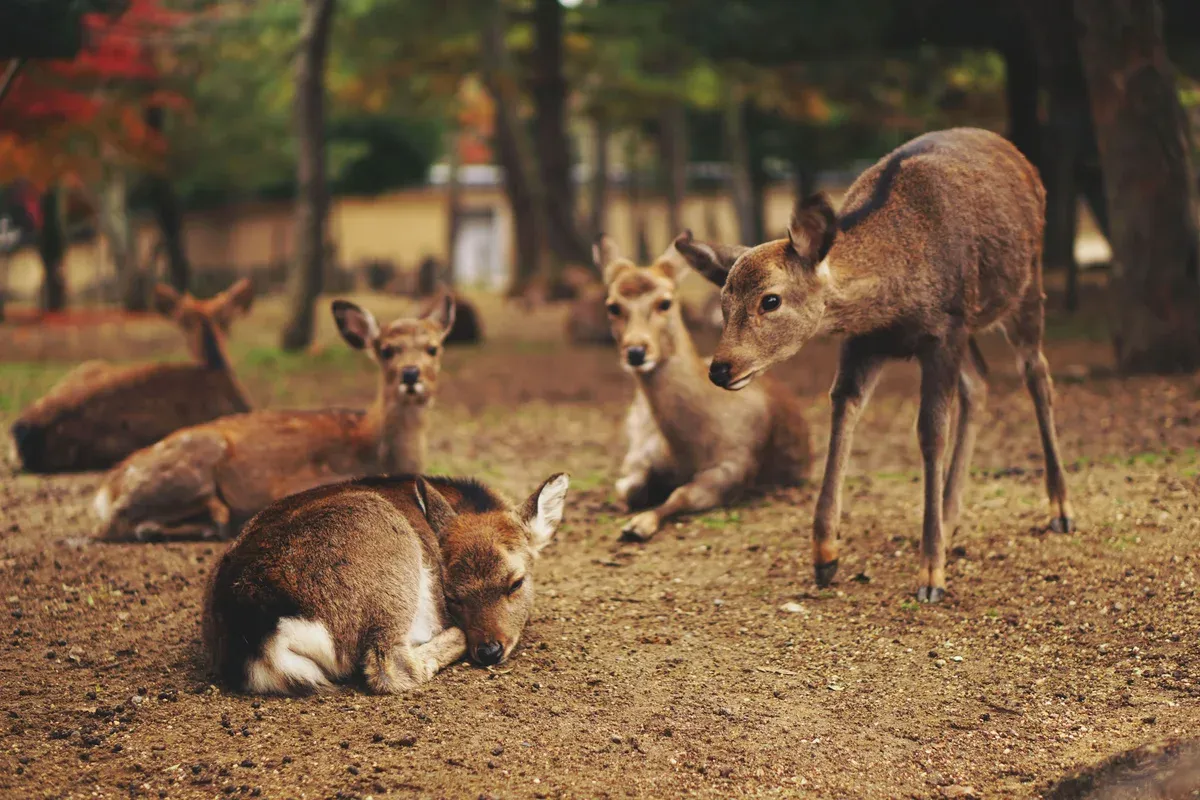
Deer rest under the trees of Nara Park, which is free to walk. Photo: Carl Flor carlflor, CC0, via Wikimedia Commons
Nara
The JR Miyakoji rapid runs every 30 minutes from Kyoto Station to JR Nara, takes 45 minutes and costs 720 yen one way. The Kintetsu express is the same 45 minutes for 760 yen with no surcharge, and it arrives at Kintetsu Nara Station, which is close to the main sights, while JR Nara Station is a 15-20 minute walk from them. The Kintetsu limited express does it in 35 minutes but costs 1,280 yen in total, because a reserved-seat supplement of 520 yen sits on top of the 760 yen fare. The Japan Rail Pass covers the JR line and is not accepted on Kintetsu.
At the far end, Nara Park and its deer are free, with crackers for the deer sold for around 200 yen, and the Kofuku-ji grounds are free around the clock. Todai-ji is about a 30 minute walk from Kintetsu Nara or 45 minutes from JR Nara. The whole day, in order, is laid out in the Nara section below, and the train choices are unpacked on the Kyoto to Nara train page. One tip: the Kintetsu express at 760 yen also leaves from Kyoto Station and arrives closer to the sights than the JR train at 720 yen, which saves more walking time than the fare difference costs.
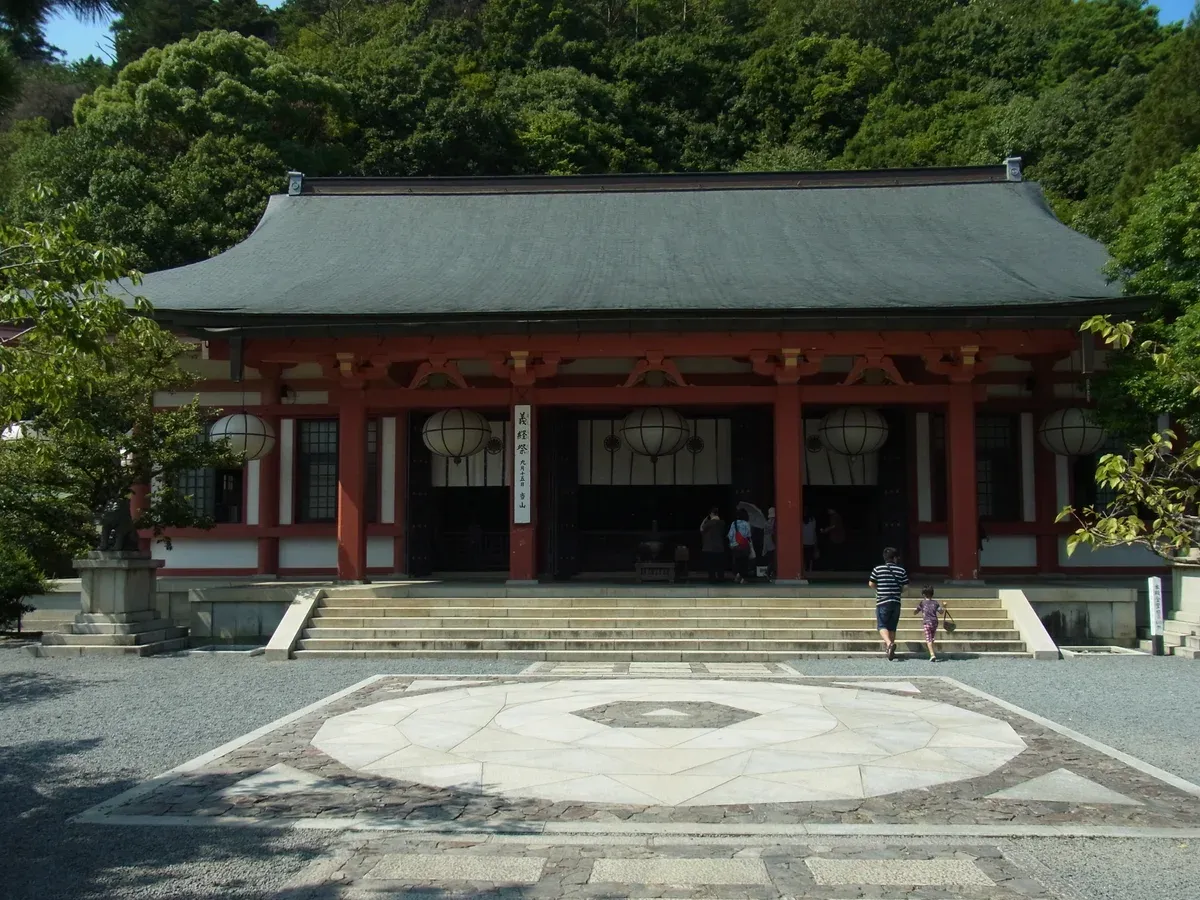
The main hall of Kurama-dera stands high on the mountain above Kurama town. Photo: Nankou Oronain (as36…, CC BY-SA 3.0, via Wikimedia Commons
Kurama and Kibune
The Eizan Railway leaves Demachiyanagi and reaches Kurama in about 30 minutes and Kibuneguchi in about 28, for 470 yen for adults and 240 yen for children, with trains every 15-20 minutes. Note that the Japan Rail Pass is not valid on Eizan.
Kifune Shrine is free and open 6:00-20:00, until 18:00 from December to April. From Kibuneguchi Station, Kyoto Bus 33 takes about 7 minutes to the Kibune stop, or you can walk 20-30 minutes to the shrine. Between the two villages, the trail up from Kibune to Kurama-dera takes about one hour on the steep section plus 30 minutes downhill to Kurama town, and Kurama-dera charges a 500 yen mountain fee, free for junior high students and younger, open 9:00-16:15. Ride up to Kibuneguchi, walk to the shrine, hike the ridge, and ride back down from Kurama. In summer, Kibune sits up to about 5 degrees C cooler than central Kyoto on hot days. One tip: the Subway and Bus 1-day Pass does not cover the Kibuneguchi to Kifune Shrine bus section, so carry coins for the 200 yen ride. The full plan is on the Kurama and Kibune day trip page.
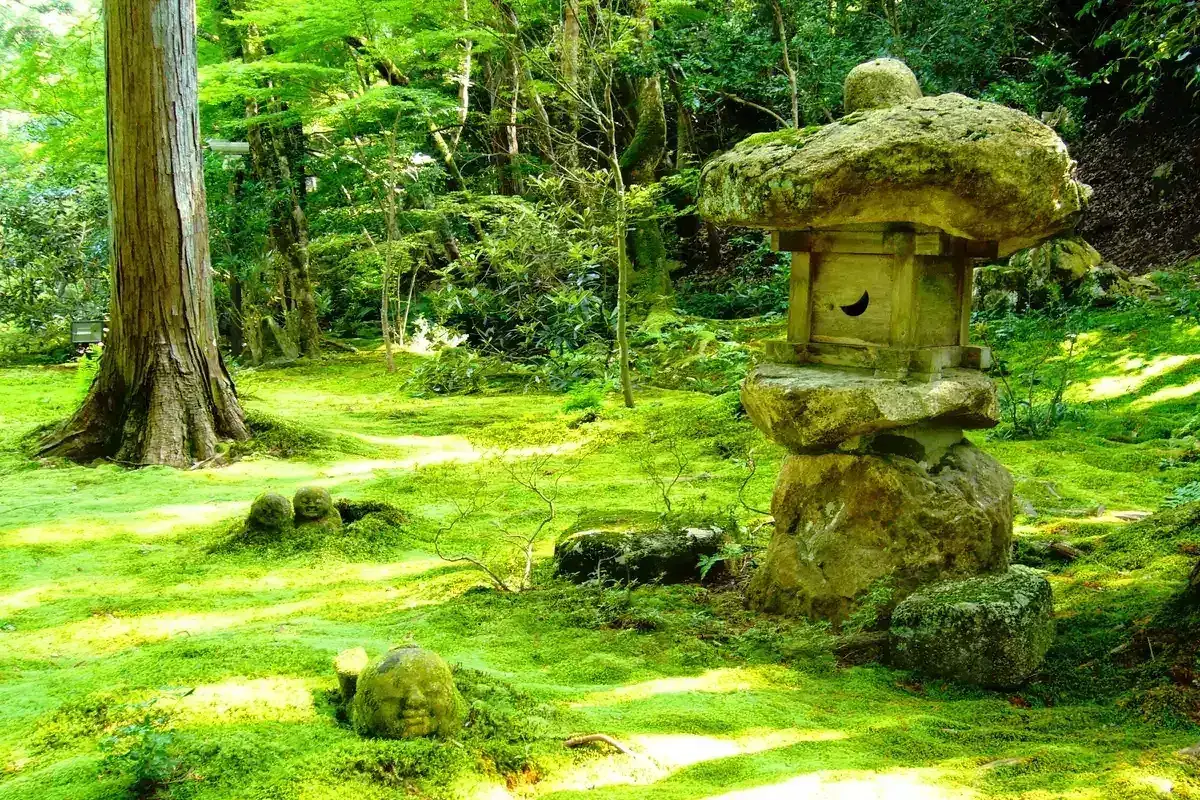
The moss garden of Sanzen-in, a 10 minute walk uphill from the Ohara bus stop. Photo: ttshr1970, CC BY 3.0, via Wikimedia Commons
Ohara
Ohara has no railway. Kyoto Bus 17 runs direct from the Kyoto Station bus terminal to Ohara in 60 minutes for 630 yen, every 30 minutes. An alternative is the subway to Kokusaikaikan, 20 minutes for 290 yen, then Kyoto Bus 19 for 20 minutes and 400 yen, which can be faster from central Kyoto. Ohara buses are not covered by the Kyoto 1-day bus pass.
The village is a valley of temples. Sanzen-in is the headliner at 700 yen for adults, a 10 minute uphill walk from the bus stop, open 8:30-17:00 from March to early December per the temple's own site and 9:00-16:30 from 7 December to February, with no closing days. The smaller temples charge their own fees: Jakkoin 600 yen, Shorin-in 300 yen, Jikko-in 600 yen and Raigo-in 400 yen. Walking the lanes between them and the river is free. Ohara's autumn foliage comes about a week earlier than in central Kyoto, which makes it a good early-season leaf trip. One tip: ride out early and set a firm return time for the Bus 17 back.
Amanohashidate on Your Own, on Video
Amanohashidate on your own from Kyoto: the trains, the costs and the viewpoints. Third-party video by Dumping memories. This site did not shoot it and has no relationship with the creator.
Nara Without a Tour, Step by Step
Nara works better on your own than almost anywhere else, because the deer park itself is free.
Choosing Your Train and Station
Two companies run Kyoto to Nara. JR's Miyakoji rapid leaves Kyoto Station every 30 minutes, takes 45 minutes and costs 720 yen, arriving at JR Nara Station. Kintetsu runs two services: the express, 45 minutes for 760 yen with no surcharge, and the limited express, 35 minutes with reserved seats only, 760 yen plus a 520 yen supplement for 1,280 yen in total, departing from platforms 1 and 2 at Kintetsu Kyoto Station just outside the Shinkansen Central Gate.
The decisive difference is the arrival. Kintetsu Nara Station is close to the main sights, while JR Nara Station is a 15-20 minute walk away, and Todai-ji is about a 30 minute walk from Kintetsu Nara or 45 minutes from JR Nara. Nara Kotsu buses connect both stations with all the main sights if you would rather ride.
The full timetable logic is on the Kyoto to Nara train page, and the destination detail is on the Nara day trip page. A small side note for planners: the Early Morning Nara Walking Tour at $68.02 puts a guide in front of you for 4.5 hours in total, with the one-way train fare from Kyoto included, though Todai-ji entry and the return fare are not, and the listing shows a further $5.07 charge it does not explain.
The Free Sights and the Paid Ones
Kofuku-ji comes first if you arrive at Kintetsu Nara, since it is a five minute walk from that station and 20 minutes from JR Nara. The temple grounds are free and open around the clock, and the famous five-storied pagoda is covered for renovation until the work ends in 2034, but the grounds stay open. The National Treasure Hall costs 900 yen, the Central and Eastern Golden Halls 500 yen each, and a combined ticket for all three is 1,600 yen, with halls and museum open 9:00-17:00 and last entry at 16:45.
From Kofuku-ji the path runs through Nara Park, where the deer are free and the crackers sold on the paths are around 200 yen. Todai-ji follows at the north end of the park. The Great Buddha Hall is 800 yen for adults and 400 yen for children aged 6 to 12, open 7:30-17:30 from April to October and 8:00-17:00 from November to March, with a joint ticket with the Todai-ji Museum at 1,200 yen. Kasuga Taisha sits deeper in the park, about 30 minutes on foot from Kintetsu Nara or a 250 yen bus to the Kasuga Taisha Honden stop. Its outer area is free, general worship hours are 6:30-17:30 from March to October, and the inner special worship area costs 700 yen, open 9:00-16:00.
The Order of the Day and the Ride Back
A clean route from Kintetsu Nara Station: walk five minutes to Kofuku-ji, cross into Nara Park, feed the deer on the way, continue north to Todai-ji for the Great Buddha Hall, then head east through the park to Kasuga Taisha, and follow the lantern-lined path back toward the station. That order keeps the climbs gentle and puts the shrine's long covered walkway on the return. From JR Nara Station the same loop works, just budget the extra 15-20 minutes of walking at both ends, or take a Nara Kotsu bus. If you want indoor culture as well, the Nara National Museum is about 15 minutes on foot from Kintetsu Nara Station, open 9:30-17:00 with last entry at 16:30, closed Mondays and 28 December to 1 January, and 700 yen for both wings.
The JR rapid runs every 30 minutes, so a missed train costs little. One tip: the deer learn where the crackers are sold, so buy them away from the Todai-ji entrance if you want calm photos rather than a crowd of nuzzling animals. For everything else on this trip, the day trips from Kyoto hub and the day trips from Kyoto map pull the whole set together.
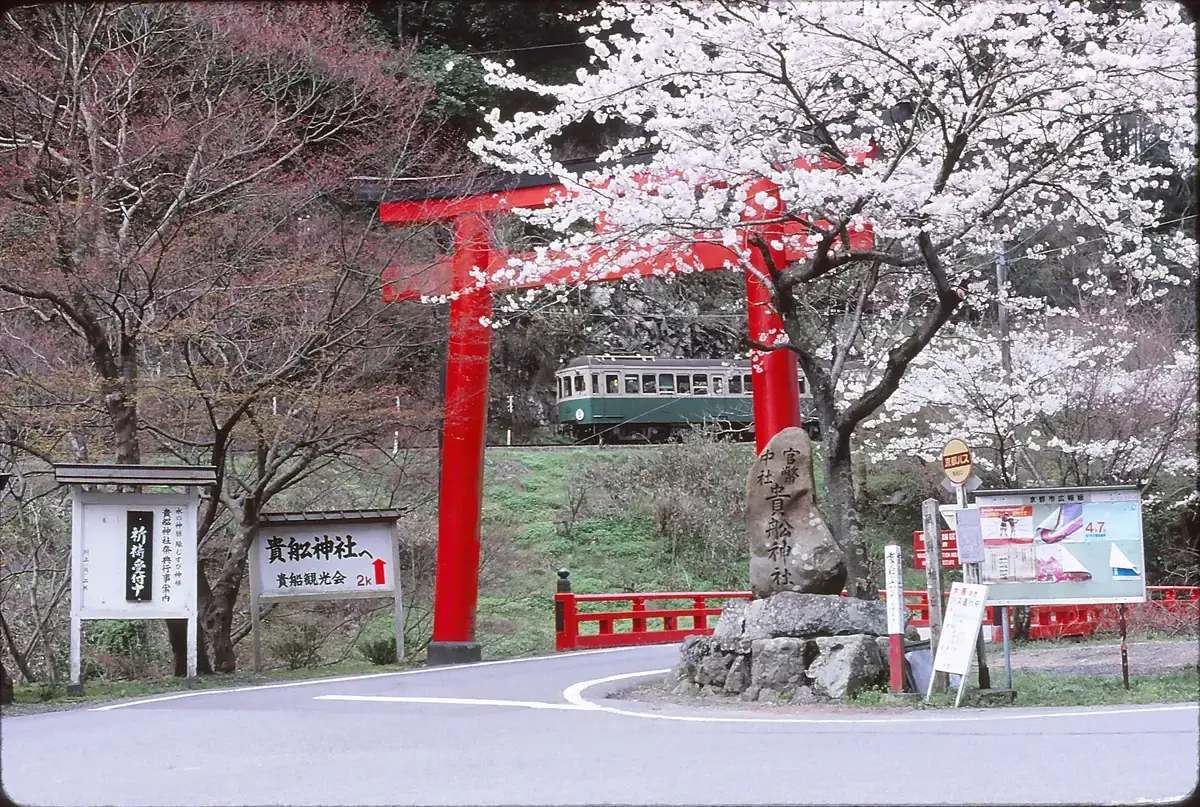
A green Eizan Electric Railway train passes a red torii and a cherry tree on the Kurama line. Photo: Gohachiyasu1214, CC BY-SA 4.0, via Wikimedia Commons
Further Out on Your Own: Kobe, Himeji, Lake Biwa, Amanohashidate, Hiroshima
These five work as do-it-yourself days by train, but each needs an early start and a check of the return schedule. Fares and times below come from japan-guide and the official pages where those could be read.
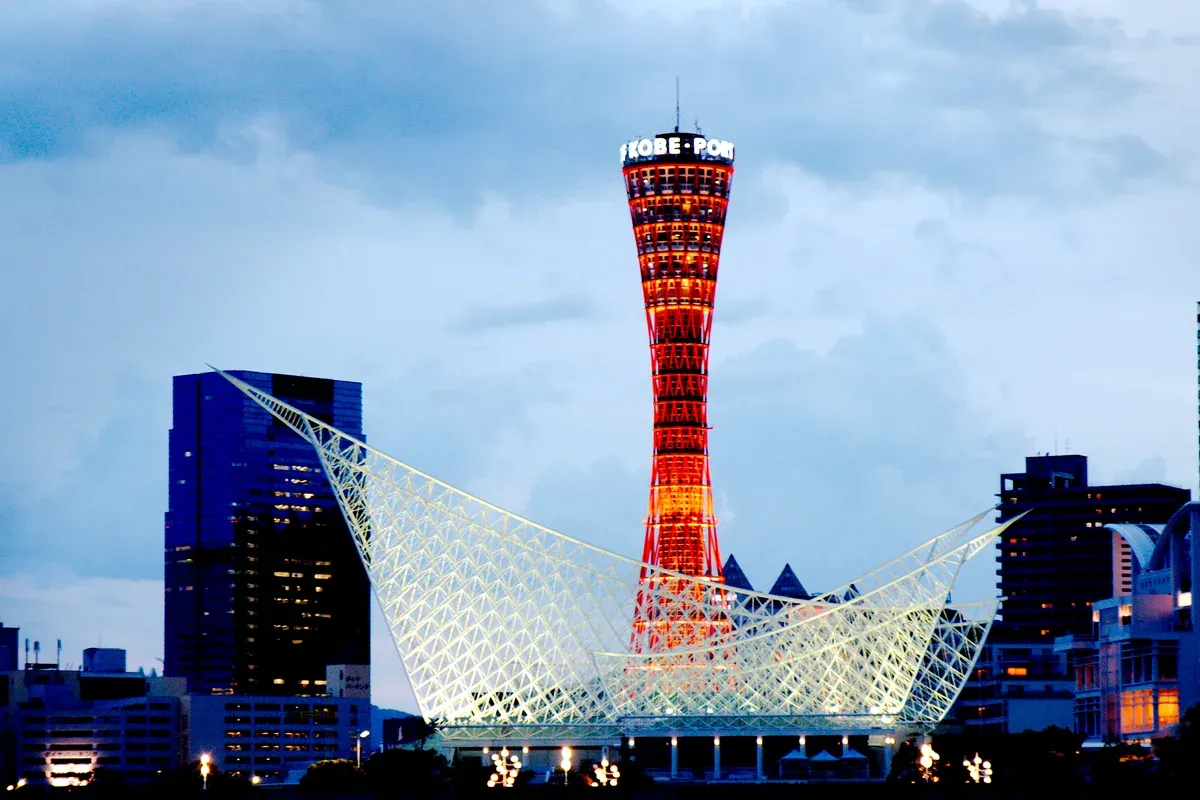
Kobe Port Tower and the Maritime Museum roof on the harbor. Photo: Daniel Gerhard, CC BY-SA 3.0, via Wikimedia Commons
Kobe
The JR Special Rapid runs four trains an hour from Kyoto Station to Sannomiya, takes about 50 minutes and carries no limited express fee. Sources quote the fare between about 1,000 and 1,100 yen, so check it at the gate. Hankyu from Kyoto-kawaramachi to Kobe-sannomiya needs one change at Juso, takes about 60 minutes and costs around 630 to 640 yen, which suits you if you stay near the Kamogawa River. The shinkansen to Shin-Kobe takes about 30 minutes for around 2,860 to 2,870 yen, and the Hikari is covered by the Japan Rail Pass.
At Shin-Kobe, the Nunobiki Herb Gardens ropeway bottom station is a 5 minute walk away and the ride up takes about 10 minutes. The ropeway and garden ticket costs 2,500 yen for adults, and the gardens at about 400 metres hold around 75,000 herbs and flowers of about 200 species. The ropeway is also closed for maintenance from 23 January to 12 February. Free options include Meriken Park, open 24 hours, and the free Hakutsuru Sake Brewery Museum, a 5 minute walk from Hanshin Sumiyoshi Station, open 9:30-16:30. For an onsen, Kin no Yu at Arima Onsen costs 800 yen (600 yen weekdays), is open 8:00-22:00 and closes on the 2nd and 4th Tuesday. From Sannomiya, an express bus to Arima takes 25 minutes for 600 yen.
If you would rather join a booked day, the Nara Park, Osaka and Kobe Full-Day Tour from Kyoto costs $129, though its description details only Nara Park and Dotonbori. It is here.
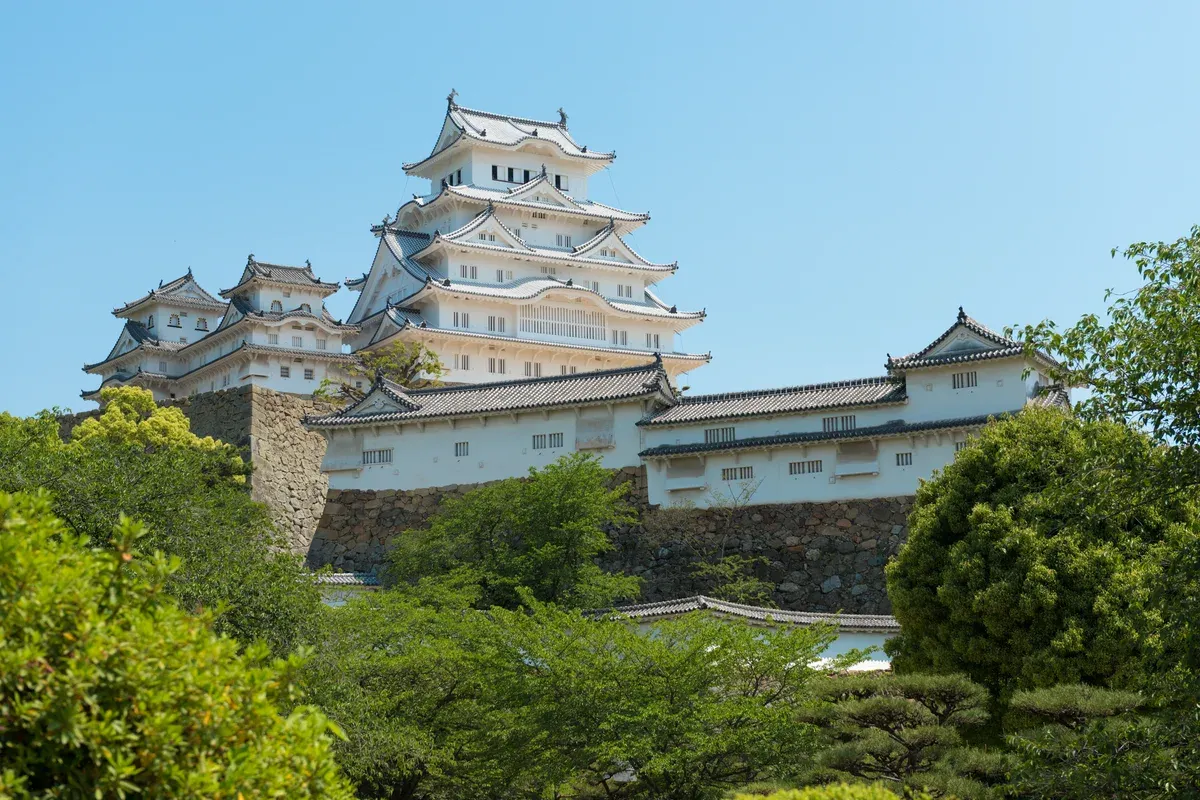
The keep of Himeji Castle, about a kilometre up Otemae-dori from the station. Photo: Nikos Kitsakis, CC BY-SA 4.0, via Wikimedia Commons
Himeji
The JR Special Rapid from Kyoto to Himeji takes about 90 minutes and costs 2,210 yen one way, with trains roughly every 15 minutes. The shinkansen takes about 43-50 minutes for 4,740 yen non-reserved, which is the 2,210 yen basic fare plus a 2,530 yen limited express surcharge. The 4-day WEST QR Kansai Area Pass at 6,700 yen covers the ordinary trains across Kyoto, Kobe and Himeji.
The castle lies about one kilometre down Otemae-dori from Himeji Station, a 15-20 minute walk or a 5 minute bus for 210 yen. From March the adult fee for non-residents is 2,500 yen, Himeji residents pay 1,000 yen with a My Number card, and under-18s enter free. The castle is open 9:00-17:00 with entry until 16:00 and closed 29-30 December, though japan-guide lists 9:00-18:00 in June-August. The tower has steep stairs, no elevator, and you carry your shoes inside. Drones are strictly prohibited, with fines up to 100,000 yen. Koko-en garden next door rises to 400 yen for adults from 1 March and is free for children of high school age and under.
No catalog tour covers Himeji from Kyoto, so this is a do-it-yourself day only.
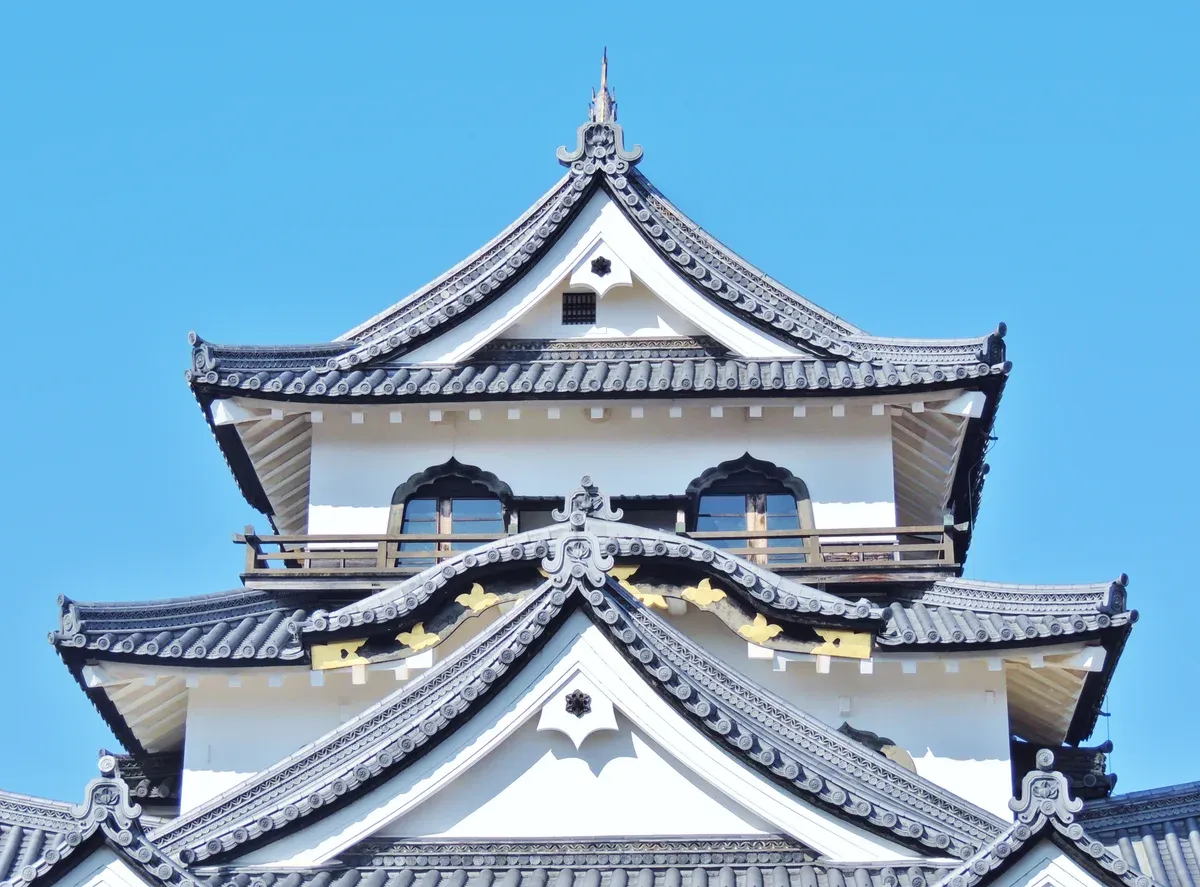
The keep of Hikone Castle, a 15 minute walk from Hikone Station. Photo: Yoshio Kohara, CC BY 3.0, via Wikimedia Commons
Lake Biwa: Hikone and Omi-Hachiman
Direct JR special rapid trains run from Kyoto to Hikone in 50 minutes for 1,170 yen. By shinkansen via Maibara the trip takes about 30 minutes and costs 2,350 yen unreserved. Hikone Castle is a 15 minute walk along the main road from Hikone Station. Castle and garden cost 1,000 yen, or 1,500 yen with the museum, and the castle is open 8:30-17:00 with entry until 16:30 and no closing days.
Omi-Hachiman is even quicker: JR special rapid trains run twice an hour from Kyoto, taking 35 minutes for 680 yen. The Hachiman-bori canal cruises cost 1,500 yen with an engine or 1,300 yen rowed, last 35 minutes and run 10:00-16:00. Rowed boats do not run on Wednesdays, during Obon, at New Year, or Monday to Thursday in January and February. The town streets and canal banks are free to walk.
Hikone fits easily into a half day if you want to add somewhere else. No catalog tour covers Lake Biwa from Kyoto, so plan this one yourself.
Amanohashidate
The direct JR Hashidate limited express from Kyoto takes 2 hours and costs 4,800-5,400 yen one way, and seat reservations are mandatory. The cheaper Tankai highway bus from Kyoto Station takes about 2 hours and costs 3,200-3,400 yen. The JR Kansai WIDE Area Pass at 12,000 yen for 5 days covers Amanohashidate excursions, including the Kyoto Tango Railway section that the Japan Rail Pass does not cover.
The sandbar itself is the point of the trip. It runs about 3 km and takes about 45 minutes to walk, or about 15 minutes by bicycle with rentals at 500 yen for two hours. Chion-ji temple is free and 5 minutes from Amanohashidate Station, and Motoise Kono Shrine on the far side is free and open 7:30-17:00. Paid extras: sightseeing boats along the sandbar every 30 minutes for 800 yen one way or 1,300 yen round trip, and the Kasamatsu Park cable car or chairlift at 800 yen for adults and 400 yen for children aged 6-12, running every 15 minutes from 9:00 to 18:00 from March to October.
If you would rather not manage the reservations, the Amanohashidate and Ine Funaya Day Trip by Bus costs $55.10 (card here) and the Amanohashidate, Ine Funaya and Miyama Day Tour starts at $86 (card here).
Hiroshima and Miyajima
This is the longest do-it-yourself day on the page and it only works if you catch an early train. The direct Nozomi from Kyoto to Hiroshima takes about 1 hour 36 minutes and costs 10,770 yen non-reserved. Hikari riders change to a Sakura at Shin-Osaka and the trip takes about two hours. A regular Japan Rail Pass covers Hikari, Sakura and Kodama but not Nozomi or Mizuho, which makes the 5-day Kansai WIDE Area Pass, which covers the Sanyo Shinkansen only as far as Okayama, a poor fit here.
In Hiroshima, tram line 2 or 6 runs from Hiroshima Station to the Genbaku-Domu Mae stop in about 15 minutes for 240 yen. The Peace Memorial Park is free and open 24 hours, and the Peace Memorial Museum costs 200 yen, opening 7:30-19:00 and requiring advance reservations for its first and last 90 minutes. For Miyajima, the JR Sanyo Line to Miyajimaguchi takes 25 minutes for 420 yen, then the ferry takes 10 minutes and costs 200 yen plus a 100 yen visitor tax. Itsukushima Shrine is a 10 minute walk from the pier and costs 300 yen for adults, open 6:30-18:00 from March to 14 October.
If that schedule sounds tight, the Hiroshima and Miyajima Day Trip with Shinkansen Tickets and Bus Tour costs $114 and includes the train tickets, shrine and museum entry, the ferry and lunch (card here).
How to Plan a Free Day Trip from Kyoto
Six steps cover almost every do-it-yourself day from Kyoto. Each one exists because a real cost or closure catches travellers who skip it.
The Planning Steps
Work through the list in order before you leave. The whole point of a no-tour day is that the train fare is the only fixed cost, so every step protects that.
- Pick the destination by travel time first. Nara is 45 minutes by JR Miyakoir rapid for 720 yen, Uji is 20 minutes for 240 yen, Himeji is 90 minutes for 2,210 yen, and Amanohashidate is 2 hours for 4,800-5,400 yen. Match the trip to the daylight you have.
- Check whether a pass beats single tickets. If you ride JR on several days, the WEST QR Kansai Area Pass at 2,700 yen for 1 day or 6,700 yen for 4 days pays off, and the Kansai WIDE Area Pass at 12,000 yen for 5 days is the one that reaches Amanohashidate.
- Reserve the limited express seat where it is mandatory. Seat reservations are required on the Hashidate and Kinosaki limited expresses, and all Kintetsu limited express seats are reserved with a separate express ticket, such as the 520 yen Nara surcharge.
- Start early. The direct Nozomi to Hiroshima takes about 1 hour 36 minutes each way, so a mid-morning start eats the day. The same logic applies to the 2 hour Amanohashidate express.
- Check seasonal buses and closures before you go. The Eizan Cablecar and Ropeway does not run from early January to mid March, the direct bus to Enryaku-ji does not run from December to mid-March, and rowed canal boats at Omi-Hachiman skip Wednesdays.
- Carry cash. Small temple and shrine fees such as the 500 yen Kurama-dera mountain fee and the 200 yen deer crackers in Nara Park are paid at counters and stalls that do not all take cards.
- Check the last train back. Buses to places like Miyama leave around 18:00 on weekdays and 16:00 on Sundays and holidays, and missing a connection at a rural station costs hours.
Passes Compared
This table compares the passes named in the official operator pages, with their prices and coverage, so you can match one to the days you plan. Figures come from JR West, Kintetsu and Nankai.
| Pass | Price | Covers | Best for |
|---|---|---|---|
| WEST QR Kansai Area Pass | 2,700 yen for 1 day to 6,700 yen for 4 days | Non-reserved seats on ordinary JR trains and HARUKA across Kyoto, Nara, Kobe and Himeji, not the shinkansen | Several JR days to Nara, Osaka, Kobe or Himeji |
| JR Kansai WIDE Area Pass | 12,000 yen for 5 consecutive days | JR lines plus Amanohashidate and Kinosaki excursions and the Sanyo Shinkansen from Shin-Osaka to Okayama | A 5-day base including Amanohashidate |
| Kintetsu Rail Pass | 1,900 yen for 1 day to 6,700 yen for 5 days Plus | Kintetsu lines, with the 1-day and 2-day versions covering Osaka, Nara and Kyoto, limited express supplements extra | Repeat Nara trips and other Kintetsu routes |
| Koyasan World Heritage Ticket | 3,980 yen digital or 4,210 yen paper | Nankai transport to Koyasan plus unlimited Koyasan town buses, valid up to two consecutive days, limited express supplement of 1,100 yen one way extra | A two-day Koyasan trip from Namba |
IC Cards and Payment
A new ICOCA card needs a 500 yen refundable deposit with a typical 1,500 yen initial charge, it stays valid 10 years, and refunding it incurs a 220 yen handling fee in JR West territory only.
Do and Don't on a Do-It-Yourself Day Trip
Do
- Do board at the right Kyoto Station exit, because the Kintetsu platform sits just outside the Shinkansen Central Gate while city buses and taxis board at the north Central Exit, and the Hachijo Exit serves the expressway buses.
- Do buy the Kintetsu express instead of the limited express when saving matters, because the direct express to Kintetsu Nara takes the same 45 minutes as the JR rapid for 760 yen with no surcharge.
- Do ride an IC card where you can, because a new ICOCA needs only a 500 yen refundable deposit and a typical 1,500 yen initial charge.
- Do check weekly closures, because the Kurama-dera Treasure Hall and Isuien Garden in Nara close on Tuesdays, the Nara National Museum closes on Mondays and the Byodo-in tea room closes Monday to Wednesday.
- Do keep the deer crackers at around 200 yen in mind as your only real cost in Nara Park, because the park, the deer and the Kofuku-ji grounds are free and open around the clock.
Don't
- Don't assume one pass covers every operator, because the Japan Rail Pass is not valid on Kintetsu or the Eizan Railway and does not cover the Kyoto Tango Railway section to Amanohashidate.
- Don't turn up without a reservation on the limited expresses, because seats are reserved only on the Kintetsu limited express and reservations are mandatory on the Hashidate and Kinosaki services.
- Don't plan Ohara around a bus pass, because Ohara buses are not covered by the Kyoto 1-day bus pass and the direct Kyoto Bus 17 costs 630 yen each way.
- Don't leave Hiroshima late, because the last stretch home involves a shinkansen fare of 10,770 yen non-reserved and a trip of about 1 hour 36 minutes on the direct Nozomi.
When a Tour Is the Better Deal
If You want Nara, Fushimi Inari and Arashiyama handled in one day without planning three routes
The Nara, Fushimi Inari and Arashiyama Bus Day Tour from Kyoto does all three for $79, with a live guide and food extra: tour details.
If You want Nara plus a hands-on matcha session in Uji with temple entries included
The Nara and Uji Matcha Day Tour from Kyoto with Todaiji and Byodoin includes both admissions and the matcha experience for $126.24: tour details.
If You want Hiroshima and Miyajima in one day without buying a 10,770 yen shinkansen ticket yourself
The Hiroshima and Miyajima Day Trip with Shinkansen Tickets and Bus Tour bundles the round-trip bullet train, ferry, shrine and museum entry and lunch for $114: tour details.
If You want the Amanohashidate coast by bus, skipping the mandatory limited express reservations
The Amanohashidate and Ine Funaya Day Trip by Bus costs $55.10 and needs no limited express reservation: tour details.
If You are a family that wants a car and door-to-door pickup instead of stations
The Private Kyoto and Nara Customized Day Tour with Hotel Pickup runs $510 per group of up to 6: tour details.
Entry Tickets You Can Book Ahead
Going on your own means buying the entry yourself. The official adult price comes from each site's own page or a published guide, and the booking link opens a dated e-ticket you show at the gate.
Tickets and Official Prices
The table sets each sight's official adult price beside a link to book a dated entry ticket online. Child rates and closing days still apply at the gate, so check them before you pay.
| Sight | Official adult price | Book |
|---|---|---|
| Osaka Castle main tower | 1,200 yen adult | Book the ticket |
| Umeda Sky Building Floating Garden Observatory | 2,000 yen | Book the ticket |
| Kobe Port Tower | 1,000 yen observation, 1,200 yen with the rooftop | Book the ticket |
Free Day Trips from Kyoto: Questions
Which day trips from Kyoto cost nothing at all besides the train fare?
Fushimi Inari Taisha is free and always open, 5 minutes and 150 yen from Kyoto Station on the JR Nara Line, with a full mountain loop of about 2-3 hours. Nara Park and its deer are free, as are the Kofuku-ji grounds, the Arashiyama bamboo grove, Kifune Shrine and Ise Jingu Naiku. More places and fares are on the free day trips guide.
How do I get to Nara from Kyoto without a tour?
Take the JR Miyakoji rapid from Kyoto Station, which runs every 30 minutes, takes 45 minutes and costs 720 yen, or the Kintetsu express for 760 yen in 45 minutes. Kintetsu Nara Station is close to the main sights while JR Nara is a 15-20 minute walk away. The full comparison is in the Kyoto to Nara train guide.
Is a rail pass worth it for cheap day trips from Kyoto?
Only if you ride often enough. The WEST QR Kansai Area Pass starts at 2,700 yen for 1 day and covers ordinary JR trains across Kyoto, Nara, Kobe and Himeji, while the Kintetsu Rail Pass at 1,900 yen for 1 day covers Osaka, Nara and Kyoto. For single trips, plain fares such as 240 yen to Uji are cheaper. The general planning overview is at planning a day trip from Kyoto.
Can I do Kurama and Kibune on my own from Kyoto?
Yes. The Eizan Railway from Demachiyanagi reaches Kurama in about 30 minutes for 470 yen, Kifune Shrine is free and open 6:00-20:00, and the Kibune to Kurama-dera hike takes about one hour uphill plus 30 minutes down. One line of detail and the full route are in the Kurama Kibune day trip guide.
What is the cheapest way to reach Amanohashidate from Kyoto?
The Tankai highway bus from Kyoto Station takes about 2 hours and costs 3,200-3,400 yen, cheaper than the Hashidate limited express at 4,800-5,400 yen one way. Once there, the sandbar walk takes about 45 minutes and bike rentals cost 500 yen for two hours. The destination detail is on the day trip from Kyoto to Amanohashidate page.
Is Hiroshima realistic as a no-tour day trip from Kyoto?
It is possible but demanding. The direct Nozomi takes about 1 hour 36 minutes each way at 10,770 yen non-reserved, so an early start and pre-booked museum entry are essential. If that sounds like too much logistics, the day trip from Kyoto to Hiroshima page sets out the options.